Every now and then, the question arises within our online support group with just how we can stop intergenerational estrangement. This is a perplexing question for a number of us, as we are highly conscious of what the effects of estrangement are, and don’t want them to be perpetuated to the next generation. It’s concerning when we start to see this unravel before our eyes, and we may feel powerless to stop it. The good news is that there are ways in which we can help to mitigate or stop estrangement in the next generation. Here, I’ll discuss just what some of these important steps can be, and how they may parallel what some of us are already going through in our own lives.
First of all, learning to make room for another person is key. Whenever we sit authentically with someone, and experience a sense of meaning, it’s because we’ve been able to make room for one another, and really hold each other’s presence. This is something we can certainly transmit towards our children, or towards another family member. By honoring their individuality, and their feelings, but also asking them to do the same for a brother, sister or other family member.
Secondly, learning conflict management strategies is equally important. Whenever a situation arises, learning how to speak with one another is a good skill to learn. Mutual brainstorming together is implicitly making room for one another, but also helping us sharpen our problem-solving skills. While all solutions needn’t be perfect, so long as a working solution can be found together, it can help to get beyond impasses that stop us, and cause us to fall into avoidance.
Third, it can be useful to develop the ability to empathize with someone else. The ability to put ourselves in someone else’s shoes helps us to understand a reality that can be different than ours. This is a skill that will sharpen our ability to be conscientious and considerate. What can that other person be feeling or going through? When we start to develop this, we are opening ourselves up towards understanding another, and start to see beyond our own identity. This ability can go hand in hand with making room for another person, and help to foster warm and significant relations with a sibling or family member.
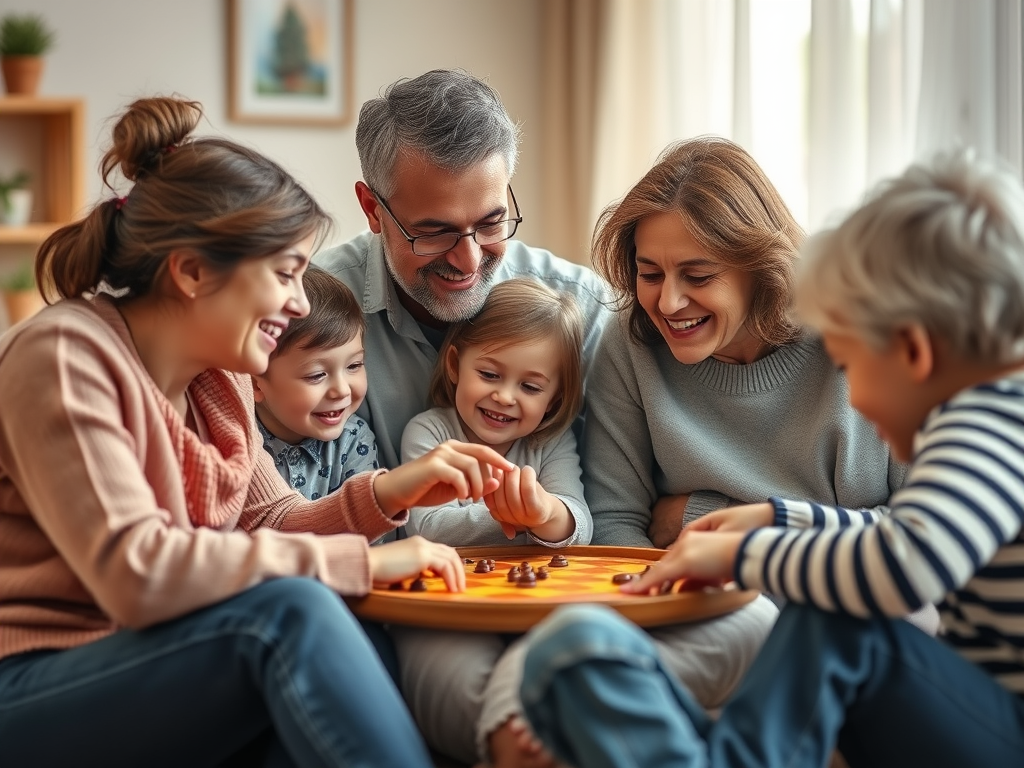
Fourth, recognizing that building family relationships takes effort, at all ages. Most of us know this. But we somehow end up taking it for granted when the kids become older, thinking they can take care of themselves and give us some respite. While this is true, working to purposefully build memories together with family members can allow for children to have a reference point for when they become adults. It gives us meaning with a family member when we can mutually look back on something that was lived together with one another. Any type of activity that fosters interaction can be good. And you’re teaching your children to value family, as something to work on, which can serve as a lesson in any other type of relationship.
Fifth, and finally, emotional regulation is another important skill to develop in children in order to protect them from the onset of estrangement. The ability to manage one’s emotions, and not let them overwhelm us is key to developing the ability to endure any type of discomfort or inconvenience in life. It ensures a healthy adaptability when things don’t go our way, and helps us to curb unhealthy behaviors and responses. When we teach this to kids, they can understand that they needn’t be at the mercy of their feelings and emotions, but rather see them as a tool, and in some cases, something to keep in check. In doing so, it will be easier to manage conflict, and make pro-active rather than reactive choices like avoidance or the silent treatment.
In closing, intergenerational estrangement can be a frightening prospect for us when we see it start to happen amongst children. The good news is that we can act to deter it with some important life-changing skills. Working on strengthening these skills will invariably make children’s relationships stronger, and help them to gain the ability in knowing how to build more connection, such that estrangement needn’t become an option when dealing with disagreements or conflicts. By helping them to foster the recognition of humanity in each other, and learning to approach one another humanely, we are helping future generations of siblings to break the cycle of estrangement.
Ali-John Chaudhary is a Registered Psychotherapist with offices in Ontario and Quebec. He helps clients from different parts of the world going through sibling estrangement issues, and produces YouTube videos on the same subject, with Author Fern Schumer Chapman. He also hosts a twice-monthly online support group, thematic sessions, and an intensive workshop, each on Zoom (see groups), for those looking to empower themselves with this rarely discussed subject.
 Sibling Estrangement